

27.02.2026
(This event was attended in early February and these insights were generated before the escalation in the Middle East.)
Three HAV team members, five days at the World Defense Show in Saudi Arabia, one of the largest global defence and security exhibitions.
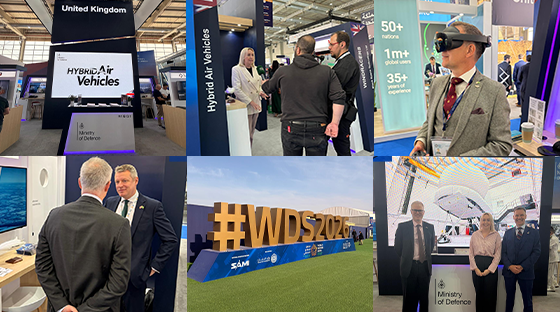
Over the course of a busy week, the team had the chance to engage with defence leaders, industry innovators, and strategic organisations, gaining a deeper understanding of the trends shaping defence priorities in Saudi Arabia and beyond. The event highlighted the focus on defence integration, innovation, and localisation under Saudi Arabia’s Vision 2030.
While the World Defense Show provided an insightful regional perspective, changes in the global aerospace and defence landscape shows these trends are part of a larger picture. Across the world, governments are increasing defence budgets, projected at $6.6 trillion by 2035. This surge in spending is accompanied by a strong focus on developing technological capabilities and advanced military systems. Record defence budgets are fuelling investment in autonomous and uncrewed platforms, intelligence, surveillance, and reconnaissance (ISR), counter‑UAS capabilities, and AI‑enabled operational technologies, as nations seek greater operational independence and adaptability. (Industry Today)
Given the changing geopolitical landscape and the increase in defence spending it was interesting to explore the key themes emerging from Saudi Arabia and the World Defense Show:
- Strategic investment in logistics and tourism: Saudi Arabia’s Public Investment Fund held a separate event during the week that outlined the fund’s priorities. They continue to prioritise projects that strengthen infrastructure and connectivity, which includes investment into developing logistics and tourism opportunities.
- Security for high-profile events: Upcoming global events in Saudi Arabia, including the World Expo 2030 and FIFA World Cup 2034, underscore the importance of scalable surveillance and resilient defence systems.
- Evolving defence priorities: Strategic ISR and integrated missile and drone defence are becoming central to national planning.
Airlander’s unique combination of payload capacity, long endurance, and flexibility position it to support these kinds of applications when modified for defence uses. In a persistent ISR role, Airlander can carry substantial sensor and communications suites for days at a time, providing continuous situational awareness and early warning over wide areas — extending the reach of traditional airborne systems. Its ability to operate from austere or contested environments without the need for conventional runways makes it ideal for operating from remote areas, rapid deployment of equipment, or support to humanitarian and logistics missions. Acting as a mobile command platform supporting persistent ISR missions, or providing extended communications and early-warning coverage, Airlander brings a combination of power, endurance, and payload that traditional aircraft cannot match.
Beyond technology, the show emphasised collaboration with local industry and the importance of tailoring solutions to specific regional needs. Engaging with potential Saudi partners, defence companies, and training organisations allowed us to see first-hand how operational requirements, environmental considerations, and strategic goals intersect in real-world planning.
By situating these insights alongside global trends, we can see how Airlander’s capabilities align with emerging global defence priorities, ensuring the platform can meet the complex, evolving needs of defence and security operations around the world.